Services / Free checklist
Technical Due Diligence Checklist for Founders
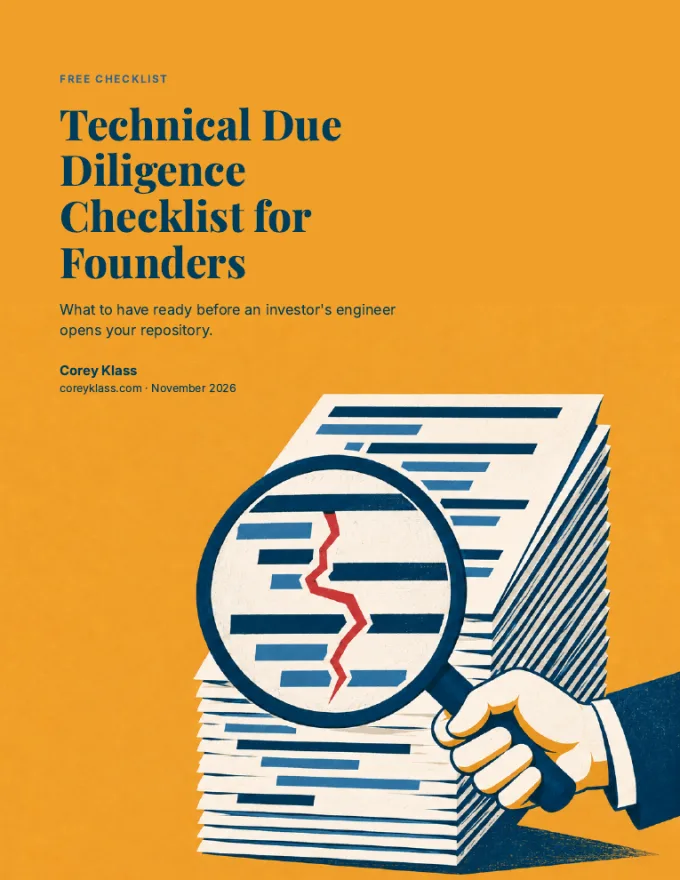
What to have ready before an investor's engineer opens your repository. Twenty items across architecture, code, security, operations, and team, with the reason a reviewer asks for each one, plus the questions to expect on the technical call and the red flags that change terms.
I'll send one email with a download link to a five-page PDF. This does not sign you up for a mailing list. How your request is handled.
What's in the checklist
Each item is a piece of evidence a reviewer is likely to ask for. Mark it ready, partial, or missing; the missing ones are your work list.
The product and its architecture
An architecture overview, a list of every claim the product makes and where the code enforces it, and the main user paths.
Code and quality
A repository a new engineer can run, tests on the paths that matter, a known-issues list with a plan, and an honest account of AI-written code.
Security and customer data
Secrets, authorization on every request, limits on every path, server-side input checks, a personal data map, and dependencies and licenses.
Operations and team
Deploys you can undo, backups with a tested restore, monitoring, access and offboarding, running costs, and who understands each critical part.
What questions does a technical due diligence reviewer ask?
Mostly questions about how the system behaves under stress and who can keep it running. These come up on almost every technical call; the checklist has the full list.
- Walk me through what happens when a user does the main thing your product does.
- What breaks first at ten times today's users?
- How much of this code did an AI tool write, and who reviewed it?
- If your lead engineer left tomorrow, what would stall?
What counts as a red flag in technical due diligence?
A finding serious enough to change the deal. The most common ones are gaps between what the product promises and what the code enforces:
- A privacy setting or plan limit that one code path skips.
- Customer data any logged-in user can reach by changing an ID.
- Secrets in the repository history or in client-side code.
- Backups nobody has ever restored.
Real examples of each kind are on the code review before due diligence page. For app-level security basics, the free AI App Launch Checklist gives you a prompt for each check.
Rather not go through it alone?
I read your code the way an investor's reviewer will, before they do, and give you a ranked list of what they're likely to flag. Focused review up to $600; full two-day review $1,500.
See the pre-diligence review