AI Systems - Architecture - Technical Leadership
I build practical, production AI systems.
30 years architecting enterprise software, now shipping AI agents, RAG systems, and integrations that run reliably in production - not demos. Everything here is something I built and run myself.
No retainer required to start. The first conversation is free.

What I build
A few of the AI systems I run in production every day. Not slideware - working software I maintain myself.
Personal AI Agent Infrastructure
A self-hosted MCP server that gives Claude live access to my real systems - a 59-tool server spanning 12 functional domains (email, calendar, files, CRM, git, storage, and more), running scheduled agents in a single production deployment.
Multi-Tenant RAG Chatbot
Chat with Claude over your own documents: local ONNX embeddings, per-organization data isolation, answers grounded in your sources with citations, a hard fail on "not in the docs," and per-message cost tracking.
Autonomous AI Operations System
A fleet of Claude agents that runs continuously against an organized knowledge base - handling email triage, CRM sync, content publishing, calendar management, and scheduled workflows on crons from every 10 seconds to weekly.
Remote MCP Servers for AI Connectors
Two live products expose their own remote MCP server - 73 tools and 21 tools - that Claude and ChatGPT connect to over the web, secured by an OAuth server I wrote so each connector is scoped to a single tenant.
This isn't a demo
A slice of my own agents running in production this morning - the same kind of infrastructure I build for clients. Every run is logged and every LLM call is cost-tracked, so AI never turns into a surprise line item.
Who this is for
You want to add AI to your product or operations, but you need it built to production standards - not a demo that breaks the first time a real customer touches it
You're already running AI and the bill is climbing - you need someone to right-size it, add guardrails, and stop the runaway cost before it becomes a headline
Your dev team has no one setting architectural direction, and technical decisions are piling up without a senior voice in the room
You're evaluating a software acquisition and need someone to tell you what's actually there - not just what the seller says is there
Your system is getting harder to maintain and you need to understand your options before committing to a costly rebuild
Your technical founder left and there's no one who understands the full system or can translate between the business and the team
How I can help
Start with a fixed-scope assessment, bring me in to build, or retain me as your ongoing technical leader. Every engagement is hands-on - you work directly with me.
AI Build & Implementation
Custom AI built to production standards - agents, integrations, grounded chat and search over your own data, and automation, with guardrails and cost controls from day one.
Architecture & AI Assessment
A focused look at your system or AI stack: what it costs to run, where the real risk is, how to right-size the spend, and your realistic options - written up as a prioritized plan.
Technical Due Diligence
For acquisitions and investments. I assess the codebase, infrastructure, and team, then deliver a written report with a realistic post-acquisition picture.
Fractional CTO Retainer
Ongoing technical leadership for companies that need a senior technical voice without a full-time hire. Up to 15 hours per week.
What working together looks like
30-minute call
We talk about what you're dealing with. I ask questions about your system, your team, and what's not working. You ask whatever you want about how I work. If it's a fit, we move forward. If it isn't, I'll tell you.
Scope and agreement
I send a short engagement letter covering scope, hours, deliverables, and payment terms. No 30-page contracts. Retainer engagements start with a 90-day term; project work is fixed-scope with defined deliverables.
Onboarding and orientation
For retainer clients, I spend the first two weeks getting oriented: reviewing code, reading documentation, talking to your team. I don't give opinions on things I haven't actually seen. By week three, I'm contributing.
Ongoing work
Retainer clients get a weekly written summary of decisions made, issues identified, and work completed. I'm available by message between sessions for time-sensitive questions. You always know what I'm working on and why.
Why me
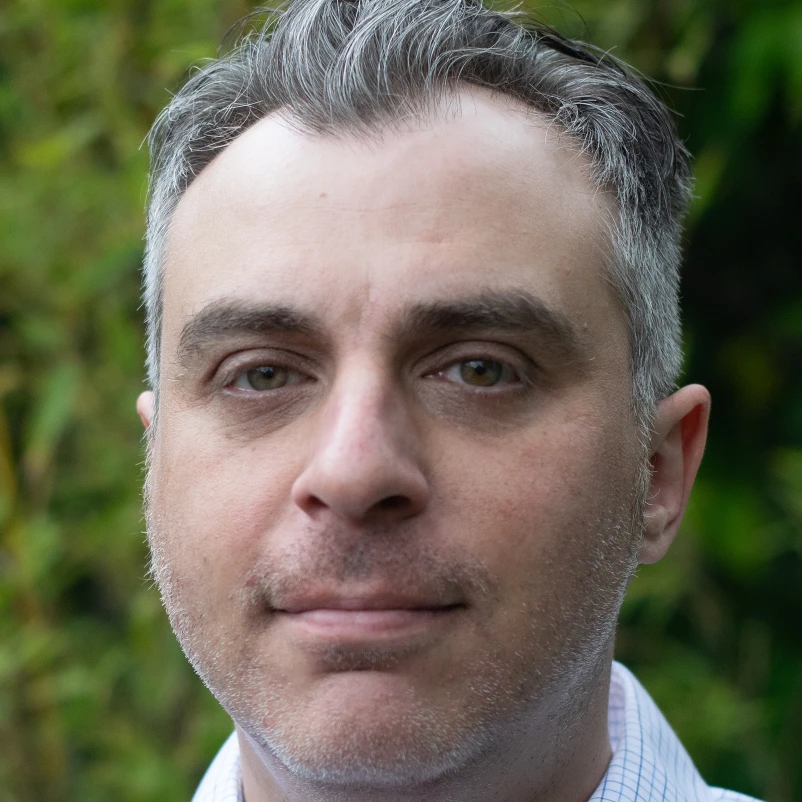
I've been building enterprise software for 30 years. For 18 of them I was the Technology Architect at Old Republic Home Protection, one of the country's largest home warranty companies. Over that time I stewarded a 20-year-old legacy enterprise platform, designed and built its modern replacement (Angular, Spring Boot microservices, SQL Server), and then designed a second greenfield cloud-first system on Azure. That full arc - legacy stewardship, modernization planning, greenfield rebuild - is something most architects never live through even once.
I still write code every day, and I run AI in production, not just in a slide deck. I operate ten live software products, a 59-tool MCP server spanning 12 functional domains, a retrieval-augmented chatbot, and a fleet of autonomous agents that runs my own business operations. That's what keeps my judgment current: when I tell you an AI project is harder than it looks, or that a vendor's cost estimate is optimistic, it's because I've done the work recently myself.
I also spent 18 years explaining technical decisions to non-technical executives and department heads. Getting the business and the technical team to the same understanding is not an afterthought in how I work - it's half the job. I can be in a room with your engineers in the morning and your board in the afternoon and give both groups exactly what they need.
Questions I get asked
Is AI actually the right tool for my problem?
Sometimes the honest answer is no, and I'll tell you when it is. A lot of what gets sold as "AI" is a script or a better process. Where AI genuinely fits, I'll show you where it pays off and where it will quietly waste money - and I build it with cost controls and guardrails so it stays reliable.
How is this different from hiring a consultant?
A consultant typically delivers a report and leaves. A fractional CTO is embedded in your company - attending meetings, working with your team, making decisions, and being accountable for outcomes. The relationship is ongoing, not transactional.
Do you work with companies that don't have an engineering team yet?
Yes. In that case the work often focuses on helping you decide what to build vs. buy, choosing a technology stack, defining what your first engineering hire should look like, and evaluating vendors or development agencies. Getting the foundation right before you build on it matters more than most founders realize.
How many clients do you take on at once?
I limit retainer clients to three at a time. I won't take on a fourth client if it means the first three get diluted attention. If I'm at capacity when you reach out, I'll tell you and we can talk about whether a project engagement makes sense in the meantime.
What if I only need a few hours of advice?
The Architecture & AI Assessment is the best fit for a bounded engagement. If you have a specific question that doesn't fit a defined scope - a vendor decision, a second opinion on a technical proposal, a hire evaluation - reach out and describe it. I'll tell you whether I can help and what that would look like.
Case Study
Automating a matchmaking firm's intake and consultation pipeline
A boutique matchmaking business was collecting client intake by hand and re-keying it, along with notes from every consultation call, into their matchmaking CRM. I built the pipeline that removed the manual step.
What I built
- A custom Angular intake form on a Spring Boot backend, with draft autosave, field-level revision history, and validation
- On submit, an asynchronous push of the intake data into their matchmaking CRM (SmartMatchApp) over its REST API, with an email notification linking straight to the newly created client profile
- A Zoom integration that captures AI-generated consultation summaries via webhooks and a Server-to-Server OAuth app, then parses and feeds them into the same CRM
- Business email migration, hosting, domain cutover, and analytics and privacy setup to take it all live
The outcome
Client intake and consultation notes now flow into the matchmaking CRM automatically instead of being typed in twice by hand. Launched in production in April 2026.
Ready to talk?
The first conversation is free. Tell me what you're dealing with and I'll tell you honestly whether I can help.
Book a 30-minute callOr reach me directly: info@coreyklass.com · 925-705-5083